


Latest news

Schneider Electric released its Q2 2026 earnings on July 30, with revenue of $13.1 billion, showing double-digit year-over-year growth. CEO Olivier Blum emphasized that data centers remain a key growth engine, but the company is diversifying through energy management, grid infrastructure investments, and multiple partnerships (such as NVIDIA, Kraken, and AiDASH). Meanwhile, the company faces tariff and inflation challenges but expects to offset impacts through pricing measures.

Trane Technologies reported second-quarter earnings with order backlog up 70% year-over-year to over $12 billion, primarily driven by its Americas commercial HVAC business. Chairman and CEO Dave Regnery said during the July 30 earnings call that the company has expanded application capacity four times over the past three years and is currently not turning down any orders. Americas commercial HVAC orders grew 50%, with backlog surging 90%, fueled by strong data center demand. The company also completed acquisitions of LiquidStack and BrainBox AI and raised its full-year revenue growth guidance to 9.5%-11.5%.
JLL released its Q2 2026 earnings report, showing an 8% year-over-year increase in revenue from its property management services division and a 12% growth in U.S. office leasing activity, driving first-half transaction volumes to post-pandemic highs. Company executives noted stronger client demand for integrated real estate services, alongside a market trend of divergence between Grade-A and lower-tier spaces.

An analysis of 750,000 data center assets by Claroty's Team82 revealed that 88% of building management systems (BMS) communicate via insecure protocols, and 40% run outdated firmware. Additionally, 41% of power distribution units (PDUs) and about one-third of heating, ventilation, and air conditioning (HVAC) systems are only 'one hop' away from internet-exposed systems. The research indicates that the convergence of IT and OT expands the attack surface of cyber-physical systems, allowing attackers to infiltrate critical infrastructure through indirect paths.

New York Governor Kathy Hochul signed an executive order on July 14, suspending environmental permits for hyperscale data centers for one year. The move aims to allow time for policy-making, but the Responsible Data Center Development Act passed by the state legislature, if signed, would affect existing facilities.
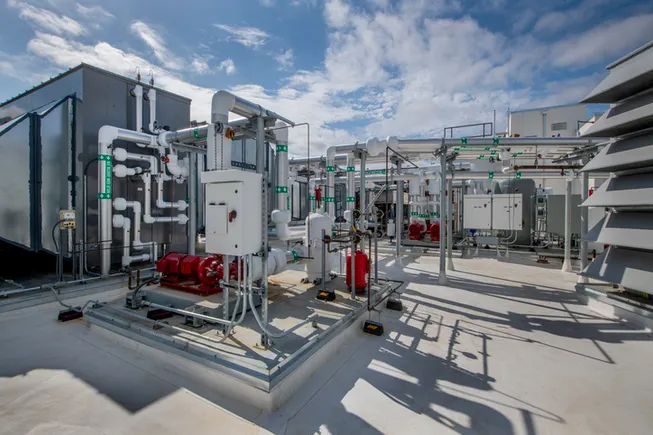
Building Performance Standards (BPS) are evolving from a design-community topic into a real compliance pressure for facility managers. Cities such as Boston and Denver have adjusted some deadlines, while New York City's Local Law 97 has entered its first compliance period with fines being enforced. Operations teams, often excluded from early design decisions, are nonetheless held responsible for meeting standards. This article analyzes the current compliance landscape and the design-operations gap, recommending that operations teams proactively manage building performance by combining continuous energy monitoring with engineering-grade models to seize early intervention windows.

JLL announced on Wednesday that it has added artificial intelligence capabilities to the Advanced Technology Group Intelligence platform within its certification lifecycle program for healthcare facility compliance. The new features support automatic extraction of report fields, flagging of empty fields or missing documents, and aggregation of results in a compliance dashboard, aiming to reduce manual errors and transform compliance management from an administrative burden into a competitive advantage.

A 2023 report by the U.S. Cybersecurity and Infrastructure Security Agency (CISA) noted that while K-12 schools adopt advanced technologies to improve teaching efficiency, they also introduce cyber risks. Experts emphasize that building systems, as network entry points, require urgent attention to security, and facility managers should work closely with technology leaders.

According to a new report from Indeed Hiring Lab, the number of positions in the US with "artificial intelligence" in their job titles has more than doubled since 2022, and AI job titles have expanded from the tech sector to non-tech industries, with non-tech AI positions accounting for more than half in five of the six surveyed markets.
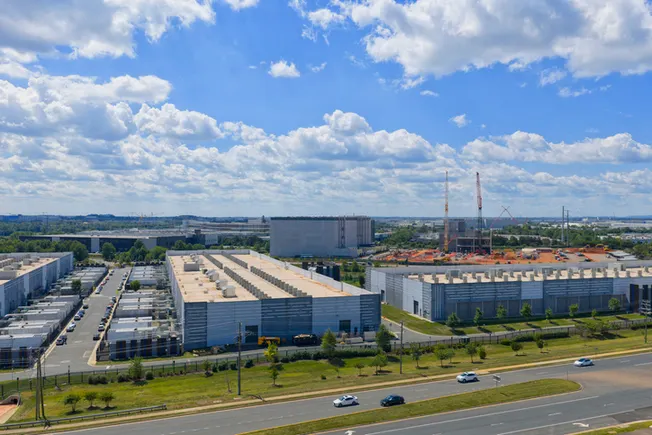
The data center industry is experiencing unprecedented expansion, with global capacity expected to double by 2030, but traditional facility management software is struggling to keep pace. Bob Mostachetti, Partner Director at Planon, notes that facility managers face pain points such as fragmented systems, increased compliance documentation burdens, and complex multi-tenant management, calling for more integrated and specialized solutions.